We Are All Help Givers and Help Receivers—Sometimes in the Same Day

Most workplace mental health programs begin with a decision:
I need help.
The employee has to recognize that something is wrong, decide that it is serious enough to address, locate the available benefit, and take the step of using it.
That sounds reasonable. But it is also a significant barrier.
People do not always recognize that they need support while they are in the middle of struggling. They may tell themselves they are simply tired, distracted, unmotivated, or having a difficult week. They may believe someone else needs the resource more. They may worry that seeking mental health support says something about their competence or their ability to do their job.
And sometimes, they are so accustomed to being the person who helps everyone else that it does not occur to them to identify as someone who needs help too.
This is one of the limitations of relying on an employee assistance program as the primary doorway to personal support. EAPs can provide valuable counseling, referrals, and crisis support. Wellness benefits can make healthy activities more accessible. But to use an EAP, the employee generally has to cross an invisible threshold first: they have to see themselves as a person in need of assistance.
Many people never cross it.
What if support did not require that identity shift?
The Line Between Helper and Help Seeker Is Artificial
We often divide people into two categories: those who provide help and those who receive it.
In real life, those roles are fluid, especially in helping professions.
None of us is only a help giver or only a help receiver.
We are all both, depending on the moment.
When support systems recognize that reality, they can reach people who would never click a button labeled “Get Help,” but would readily open a resource called “How to Support Someone Who Is Overwhelmed”.
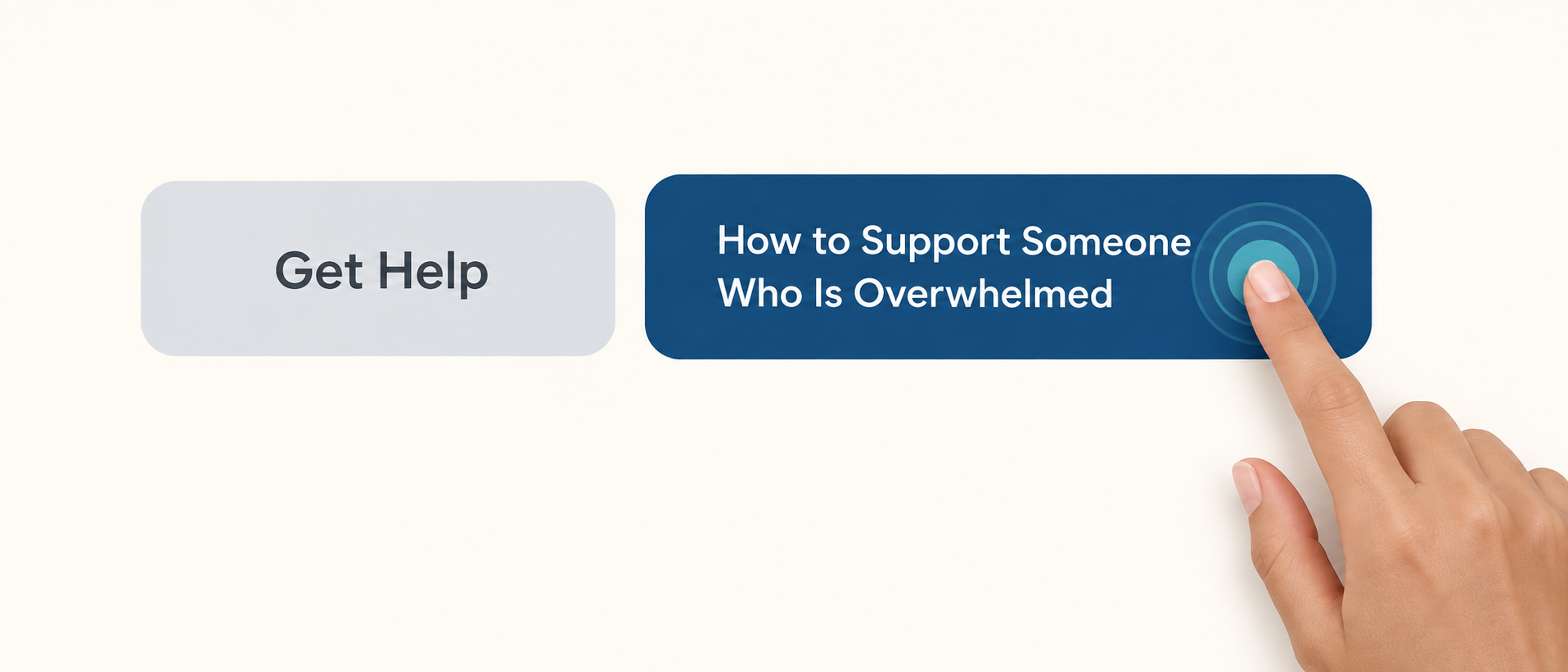
They may arrive because they want to help someone else. Along the way, they learn something that helps them too.
Helping and receiving are fluid roles
- 1
Receive support
- 2
Learn and practice
- 3
Support another person
- 4
Build confidence and purpose
- 5
Receive support again when needed
People Often Enter Through the Door That Feels Safest
For many people, helping is a more comfortable identity than needing help.
It allows them to take action without first acknowledging vulnerability.
Imagine an employee who opens a lesson on helping someone manage anxiety. They learn how the body’s stress response works, how to slow down a conversation, and how grounding can reduce emotional intensity.
They came looking for language to use with someone else—but they also begin recognizing their own racing thoughts, shallow breathing, and difficulty settling at night.
The resource has created awareness without requiring a declaration of distress.
It does not wait for someone to decide, “My mental health is bad enough that I should seek help.” It offers useful knowledge for a role they already value—and allows personal insight to emerge naturally.
Why Traditional EAPs Can Miss People
EAPs serve an important purpose, particularly when an employee wants confidential counseling, a referral, crisis support, or help with a clearly identified problem. Wellness benefits can also make it easier to engage in activities that support physical and emotional health. A dual-pathway model should complement these benefits, not compete with them.
But even a high-quality benefit has limited impact when the people it is intended to serve do not recognize themselves as needing it…or only do so when the problem is severe.
The phrase “employee assistance” itself suggests that the person must need assistance. For workers who pride themselves on being dependable, capable, or responsible for others, that can feel like a category they do not belong in—or do not want to belong in.
Traditional EAP engagement can also depend on several steps occurring in the right order:
- The employee notices a problem.
- They identify it as something support might help.
- They remember the EAP exists.
- They believe the benefit is relevant and confidential.
- They are willing to initiate contact.
- They have enough energy and executive functioning to follow through.
Each step is a potential drop-off point.
A dual-pathway model creates another route. Employees can enter through professional growth, curiosity, or the desire to help another person. They do not have to be ready to call themselves distressed before they encounter something that supports their well-being.
An additional doorway into support
Traditional help-seeking pathway
- Notice a problem
- Identify it as serious
- Decide to seek help
- Locate the benefit
- Initiate contact
Dual-pathway entry
- Learn a skill
- Help someone else
- Recognize something in yourself
- Use the same skill personally
- Seek additional support if needed
What a Dual-Pathway Support Model Looks Like
At 4C Mental Health, every course is designed to do two things:
- Build personal resilience and emotional well-being.
- Strengthen the person’s ability to support others.
A lesson on emotional regulation is useful when a client becomes overwhelmed—and when the worker does too.
Content about trauma, boundaries, stress, or self-doubt can strengthen helping skills while quietly giving the helper language for their own experience.
This design is especially relevant for peer support specialists, peer navigators, community health workers, social service case managers, behavioral health navigators, frontline nonprofit staff, and early-career behavioral health workers.
People should not have to identify as unwell before gaining access to something that helps them feel better.
The Same Person Can Need Different Things on Different Days
People do not have to remain passive recipients of support. They can grow from learners into helpers, and they can return to receiving support whenever life requires it. That reciprocity builds competence, purpose, belonging, and dignity.
It also removes the hierarchy implied by the idea that some people are well enough to help while others are unwell enough to need help.
Everyone has something to give. Everyone has moments when they need something too.
A Better Question for Employers
When organizations evaluate employee mental health support, the question should not only be:
What services are available when someone asks for help?
It should also be:
How are we reaching the people who do not yet identify as needing it?
When we create resources that honor both sides of people—the side that helps and the side that sometimes needs help—we expand the doorway into support.
That is not a workaround for getting people into mental health support.
It is a more accurate reflection of who people already are.
Interested in a workforce-support model that builds helping skills and personal resilience at the same time?
Partner with usRelated reading
The Next Phase of Behavioral Health Workforce Investment: From Expansion to Sustainability
Behavioral health workforce investment cannot stop with recruitment and training. Learn why workforce sustainability, confidence, and ongoing support must come next.
Read articleWhy Peer Support Specialists Burn Out—and What Actually Helps
Too many peer support specialists burn out—not from a lack of caring. Look at the workforce model behind peer burnout and the support that helps peers sustain the work.
Read article4C Mental Health statistics are internal program data. Participant outcomes are self-reported.